
Which City in the UK Has the Most Beautiful Architecture?

Which City in the UK Has the Most Beautiful Architecture? A Definitive Ranking
Britain is full of architectural marvels that showcase artistry and engineering. From the ancient Roman baths of Bath to the ultra-modern landscape of London, every nook and cranny has an interesting tale to tell. Many travelers visiting Britain have heated discussions about which town is home to the most beautiful architecture. It is true that beauty lies in the eye of the beholder, but some cities always seem to have an upper hand thanks to their symmetry and aesthetics. Let us find out which cities come out on top!
Why Architecture Matters When Choosing a UK City to Visit
The architecture of a place determines how we experience that place. Taking a stroll through the streets of a medieval city center transports us back in time, whereas exploring an industrial port city from the Victorian period will provide insights into trade and innovations at the time. There are many people who design their entire holiday around exploring architecture of cities that include beautiful examples of Gothic architecture, Georgian crescents, and other styles. Knowing which cities emphasize on aesthetics is one way to use your time efficiently. If your planned vacation involves visiting places with notable architecture, then efficient transportation within the area is crucial. For instance, when traveling to Hertfordshire, Cabs in Hemel will enable you to visit Berkhamsted and St Albans with ease.

London: The Ever-Changing Architectural Giant
Any discussion about architecture in the United Kingdom must include mention of London, whose buildings span from the medieval Tower of London all the way to the modern and futuristic Shard tower. The fan vaulted ceiling of Westminster Abbey is a display of the expertise of English Gothic architecture, whereas the Baroque architecture of St. Paul’s Cathedral is a result of the resilience following the destruction caused by the fire of 1666. Furthermore, the city’s modern buildings, like the Gherkin and the Walkie Talkie buildings, have earned international accolades for being innovative. Still, it can be claimed that the congestion of buildings in London produces a haphazard skyline.
Edinburgh: The Athens of the North
The best city for drama and harmony in aesthetics? Edinburgh! The city of Scotland is split into two distinct parts: the medieval Old Town, which consists of closes, and the Georgian New Town, featuring neoclassical terraces. The imposing Edinburgh Castle stands on the top of a dormant volcano, while the Scott Monument celebrates the literary achievements in Victorian Gothic style. What makes Edinburgh exceptional is its use of natural landforms such as cliffs, hills, and valleys to enhance the city architecture. The atmosphere is almost theatrical. It is common knowledge that both the Royal Mile and Princes Street resemble scenes out of fairy tales. Unbiased tourists tend to prefer Edinburgh over London in terms of aesthetics.
Bath: A UNESCO World Heritage Masterpiece
London and Edinburgh might be bigger, but Bath shows that small cities can match their beauty when it comes to architecture. Bath is the only city of the United Kingdom to hold the title of a UNESCO World Heritage Site due to its architecture. This was possible because of the golden-honey colored Bath stone found in all the buildings of the city. The Royal Crescent is a perfect example of an iconic set of buildings. The crescent-shaped street contains thirty Georgian houses which are believed to be the most photographed terraces in the world. The Circus, resembling the Colosseum, highlights mathematical perfection.
Oxford and Cambridge: The Eternal Academic Rivals
Popularly known as “the city of dreaming spires,” Oxford boasts breathtaking examples of architecture from all English periods from Saxon to modern. Radcliffe Camera, Christ Church College, and Bodleian Library represent poetic architecture. Likewise, Cambridge boasts of competing with King’s College Chapel – one of the most remarkable examples of Perpendicular Gothic architecture – and the mathematical bridge at Queens’ College. Yet both towns have something in common, that is, their architecture is related to knowledge and traditions. Nonetheless, while there are some industrial elements to Oxford, Cambridge stretches in a serene manner on the banks of the River Cam. It appears that most authorities slightly favor Oxford because of its greater number of architectural structures. For those considering visiting both these cities during a tour of English architectures, efficient transportation between these centers is crucial. It would be best to book an Airport Taxi Hemel Hempstead after landing at Luton or Heathrow Airport.
York: The Medieval Jewel
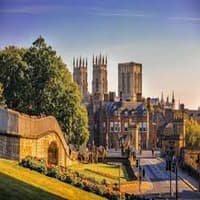
For lovers of pre-industrial architecture, nothing beats York. For starters, the York Minster is the biggest gothic cathedral in Northern Europe. The Minster is known for stained glass windows which have survived several wars and reformation in history. However, in addition to this, there are timber-framed houses built side-by-side along some medieval streets in York. This place is called “snickelway.” One street known as Shambles is considered to be one of the best preserved medieval market places across the globe. The streets are so narrow that they barely let sunlight touch the ground. Apart from all this, the city still holds its walls which you can walk through completely.
Liverpool: The Victorian and Maritime Powerhouse
Liverpool provides a unique form of beauty, which is monumental and industrial at once. Royal Albert Dock is the largest complex of Grade I listed buildings in the United Kingdom. This complex was constructed using cast iron and brick. “The Three Graces” – the Royal Liver Building, the Cunard Building, and the Port of Liverpool Building – reflect the richness that Liverpool experienced during the British Empire. Two cathedrals in Liverpool are the Anglican cathedral, which is the embodiment of modernism, and the Catholic cathedral, which belongs to the category of brutalism. Another unique thing about Liverpool is its Georgian quarter called Canning.
Also raed: Tracing Your Roots: How Did Your Ancestors Migrate to the United Kingdom?
The Verdict: Which City Wins?
With the above considerations in mind, beauty lies in the eyes of the beholder, and the winner will depend on your own taste. If you’re after a picturesque skyline with many layers of history, go for Edinburgh. If you fancy Georgian architecture in perfect unity, there is no match for Bath. For medieval splendor, nowhere else can touch York. But for diversity and landmarks, nothing beats London in the world. Nevertheless, among all these cities, it’s Edinburgh that wins hands down, especially because of the natural environment enhancing the architectural surroundings.
Final Tips for Architectural Travelers
No matter what your favorite city is, make sure you time your visit to coincide with the “golden hour” (morning or evening) to get the ideal lighting on the stone facades. Take a wide-angle lens if you plan to photograph interior spaces such as King’s College Chapel or Westminster Abbey. But do remember to find out whether the buildings are accessible or not; many colleges in Oxford and Cambridge remain closed during exams.




Responses