
Why Great Britain is Considered One of the Most Difficult Places to Drive in the World

Why Great Britain is Considered One of the Most Difficult Places to Drive in the World: A Complete Guide
Driving in Great Britain is sometimes characterized not just as traveling from point A to point B, but rather as an initiation into hellfire. The UK usually tops world polls in terms of being one of the toughest places to drive in terms of stress, difficult traffic regulations, and tough roads. While Germany offers its Autobahn and the U.S. boasts its grid-like highways, Britain offers a different blend of ancient routes and congested roads. Many ask how residents of the country remain calm while navigating their streets. The challenge is ingrained within the geography and history of the entire nation.
There is more than one reason for this problem, but an important one is the great age of the road system. While some countries, being more recently developed, planned the construction of cities to accommodate cars, Great Britain’s roadways are based on a legacy of Roman, medieval, and Victorian pathways. In smaller towns such as the Hertfordshire type, maneuvering through such convoluted streets needs familiarity and great patience on the driver’s part. For example, using a Taxi Hemel Hempstead booking service means you have drivers familiar with the streets and aware of those that are suitable for two-way movement and those that constitute one-way nightmares.

The “Roundabout Revolution” and Its Cognitive Load
A conversation about how difficult it is to drive in Great Britain cannot go by without mentioning the roundabout. While everywhere else in the world, roundabouts are merely traffic-calming devices, the citizens of Great Britain have taken them to an entirely different level—almost an art, but definitely a nightmare. The famous “Magic Roundabout” located in Swindon features five small roundabouts surrounding a single central circle. Driving in such a roundabout requires giving way to traffic coming from the right, while at the same time keeping track of the cars trying to cross to your left. Not only do British roundabouts feature such complicated junctions, but they also use spiral roundabouts with no lanes marked in the middle of the circle.
Congestion, Cameras, and the Cost of Mistakes
One additional challenge posed by UK driving is the stringent enforcement of traffic laws. The country boasts one of the largest networks of speed cameras, average speed camera zones, and bus lanes cameras in the world. Moreover, the punishment is both quick and harsh. Even just for a few seconds losing focus and jumping the light, you will be hit with fines and penalty points on your driver’s license. With the advent of Ultra Low Emission Zones (ULEZ) and Clean Air Zones (CAZ) in urban areas, even driving an older car within certain postcodes could earn you fines. It essentially turns the act of driving into a constant watchfulness game where you have to keep a lookout not just for roads and other motorists but also for complicated restrictions based on the time of day.
Navigating Narrow Lanes and High Speeds on Country Roads
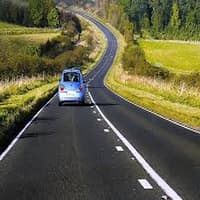
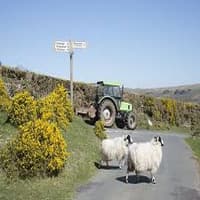
While city driving is challenging, it’s in rural Britain that the experience becomes truly dangerous. The maximum allowable speed on a single-lane road in Britain is 60 mph. However, such roads tend to be not much wider than one car, have numerous blind corners, and have secret farm access ways. Driving fast but expecting to have to go back half a mile to the next passing point. Such roads do not have shoulders or street lights; even reflective signs are rare. At night, they turn into pitch-black tunnels made up of plants. Such an environment of fast cars and no room for mistakes is psychologically exhausting. It is no surprise then that many people in the UK opt for specialist transportation on long or complicated routes. Especially when coming by air, the stress sets in from the moment of landing. Instead of renting a car and going straight onto motorways and junctions, a savvy traveler usually makes use of pre-booked ground transportation services. An example is the taxi service in Hemel Hempstead Airport Taxis providing just this kind of opportunity.
The Left-Hand Drive Barrier and Manual Transmission Dominance
As far as the majority of the world (66%) who drive on the right, switching to the left-hand side of the road in Britain is incredibly challenging from a psychological standpoint. One must forget not only what side of the road he should be driving on, but also how he should assess his spatial surroundings. Suddenly, your dominant eye finds itself closer to the middle of the road, making it difficult for one to see his left side. All traffic circles go in a clockwise direction rather than counter-clockwise and require you to check your mirrors in a different order. To make things even more complicated, over 70% of all vehicles in Great Britain have stick shifts. Driving a car with the gear stick to your left as well as the clutch pedal at the same time around a busy roundabout will test your physical capabilities to their absolute maximum.
Unpredictable Weather and Road Surfaces
The fourth factor is the weather. The weather in Great Britain is known to be changeable. It is not rare to have four seasons during one day in Great Britain; this leads to micro-climates, where one minute there was a dry surface on the road and a second later it became very dangerous because of the presence of slippery leaves. Besides, flash floods, black ice, and low sun glare create difficulties while driving. Many roads in Great Britain are in bad conditions; they have holes that can ruin car suspensions.
Also read: Separate vs. Joint Bank Accounts for Married Couples Living Apart
Conclusion: A Test of Skill, Not Just Patience
At the end of the day, Great Britain is regarded as one of the toughest countries in which to drive due to the need for adaptation, anticipation, and precise control that is completely unnecessary almost anywhere else. It is a place where the old-fashioned infrastructure is combined with a large volume of traffic, where a bad decision at a roundabout means an additional 20 minutes of travel time, and where a mere oversight in the bus lane can cost you £130. The natives seem to make this business smooth and easy but this is because they have decades’ worth of practice behind them. As a visitor, you should consider yourself lucky to be able to accomplish the feat. Nevertheless, if you are interested in your mental state and your financial wellbeing, hiring professional drivers would be your best bet. In Britain, the roads always get the upper hand regardless of whether you drive through the narrow streets of some ancient market or on a crazy highway such as the M25.


Responses