
If a Nuclear Bomb Hit London, Would the Rest of the Country Die a Slow Horrible Death?

If a Nuclear Bomb Hit London, Would the Rest of the Country Die a Slow Horrible Death?: A Complete Guide
A nuclear attack on a city such as London is a popular theme within dystopian writing and cold war scenarios. However, while the explosion itself and the ensuing fire and shock waves that would annihilate Central London would be the immediate effects of an attack, the greater fear that grips the remaining seven million people in Manchester, Birmingham, Glasgow, and even rural Cornwall is whether the aftereffects of such a strike would ensure their ultimate doom. Fortunately—or unfortunately, depending on one’s point of view—the answer to the dilemma is both grim and not a sure thing at all.
The Immediate Catastrophe: Understanding the Bomb’s Radius
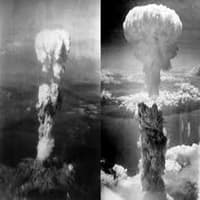
Before considering the impact on the nation as a whole, it is necessary to consider the definition of a “nuclear bomb.” Contemporary warheads are much more potent compared to those used in Hiroshima and Nagasaki, but for the purposes of discussion, we will take into account only one 1-megaton bomb (roughly sixty times the strength of the Hiroshima bomb). The explosion radius of such a bomb detonated at ground level over Westminster would span 1.5 miles, annihilating everything in that area, including the Houses of Parliament and London Eye. The shockwave of the explosion would destroy all the buildings up to 5 to 7 miles in the vicinity, such as Stratford, Hampstead, and Greenwich.
On the other hand, the people living in Hemel Hempstead, which is situated roughly 25 miles to the northwest of Central London, would experience drastically different results. The local cab service, Cabs In Hemel, could still be transporting the citizens to work, oblivious to the flash that they have just witnessed. While they would definitely feel the rumble and hear the explosion, the damage done by the explosion would probably break some windows and even crumble sturdy houses. But the true horror lies in the aftermath of the explosion.

Fallout: The Invisible Killer That Dictates National Survival
Fallout consists of the radioactive dust and debris that get carried up by the mushroom cloud. As it floats away downwind, the heavier elements fall back down to the earth, sending out deadly gamma rays. For the rest of the nation, this is what poses the biggest danger. The potential for an excruciatingly slow death due to acute radiation sickness (ARS), characterized by nausea, vomiting, hair loss, internal hemorrhage, and organ failure, becomes very real.
And here is the key aspect that determines everything else: British weather. Winds across the United Kingdom are normally coming from the southwest to the northeast. In case the target is London, the fallout cloud will move over Essex, Suffolk, and into the North Sea. This means that a considerable part of the country – Wales, South West, North West (Manchester and Liverpool), and Scotland – will get relatively small amounts of fallout. But in case the winds change course and turn northwards, the fallout cloud will move right through the Midlands, such cities as Northampton, Leicester, and Sheffield getting their share of highly dangerous radiation doses.
In contrast, residents of Cornwall, Cumbria, or the Scottish Highlands may never be exposed to a hazardous dose. Instead, their slow demise would result not from radiation sickness but from indirect consequences—the breakdown of society.
Infrastructure Collapse: Starvation, Medicine, and Order
- This is where the story of the “slow horrible death” comes into play. While one may survive the fallout, London represents the economic, transportation, and government hub of the UK. The destruction of London will lead to:
- The Grid Collapse: The national grid works through a balance between power plants (most of which use nuclear and gas fuels) and substations. An EMP created by a high-altitude explosion will burn out the transformers. Even in a ground explosion scenario, London-based switching stations will be destroyed. Without electricity, water pumping, sewage disposal, and refrigeration will cease within 48 hours.
- Fuel and Food Shortages: The major source of fuel in southern England is through pipelines and ports located in London. This means that after its destruction, there will be no more gasoline left within a week. Since supermarkets operate under a just-in-time inventory strategy, Birmingham and Bristol will experience shortages within seven days.
Medical Breakdown: Non-London hospitals would be swamped by burn cases and those suffering from radiation sickness escaping from the city. In the absence of electricity to power ventilators, clean water to carry out dialysis treatment, and supplies of antibiotics, any infection could become fatal.
In the case of evacuation in Hemel Hempstead, the scenario will be chaotic. A local taxi driver running an Airport Taxi Hemel Hempstead service may suddenly find himself participating in the effort to evacuate civilians to safety. But the absence of government direction will mean that the efforts will be ad-hoc, possibly resulting in people moving straight into the path of danger.
The Long Tail: Would Everyone Die Slowly?
The most straightforward answer would have to be no. Though millions of people will perish because of the explosion, fall-out areas, and famine, a fair percentage of the British population will survive at least through the end of the year, for the following reasons:
- Geographical advantages: The United Kingdom is a thin country. Favorable winds would protect much of it from destruction. People from remote parts of England, such as the Lake District and Snowdonia, and Scotland, the Hebrides Islands, could become isolated in their locations and survive by eating their livestock and grain stores.
- Survival through agriculture: Contrary to a scenario of the “nuclear winter” (in which hundreds of explosions would have to happen in order to darken the world), one bomb won’t affect the Earth’s temperature. People could grow food outside the fall-out area, despite the fact that they would lack fuel for tractors.
The “slow death” would only apply to those who happen to be in the wrong place at the wrong time – such as the area where fallout would travel, areas whose food runs out, and hence, become violent, or those unable to secure clean drinking water. In contrast, individuals living in countryside Wales or Northern Ireland could live relatively normal lives.
Also read: Earth’s Final Frontiers: The One Place You Couldn’t Pay Me to Visit
Conclusion: Horrible for Some, Survivable for Most
So, if a nuclear bomb were to explode in London, would everyone else in England slowly perish? In short, the answer, backed by data, is that no, not all of them, nor will it be a slow process. There may be a couple of million who die instantly due to radiation, or a few months down the road because they starve or contract diseases. But millions more, probably most of the UK’s 67 million population, would live. It might mean a harsher life, akin to that in pre-industrial times, with no internet, no NHS, no government, and no electricity. But some people would die instantly, while others wouldn’t. Humanity’s tenacity and the varied weather patterns of the UK would see to it that not everybody perishes slowly.





Responses